Expertise and Interest
Macroeconomic Policy
Climate Change & Environment,
Energy and Green Economy
International Development Finance
Aid Effectiveness
International Trade and WTO Issues
Digital Economy
Youth Employment
Health Issues
Interests of Least Developed Countries (LDCs)
Sustainable Development Goals (SDGs)
Women’s Contribution to the Economy
About
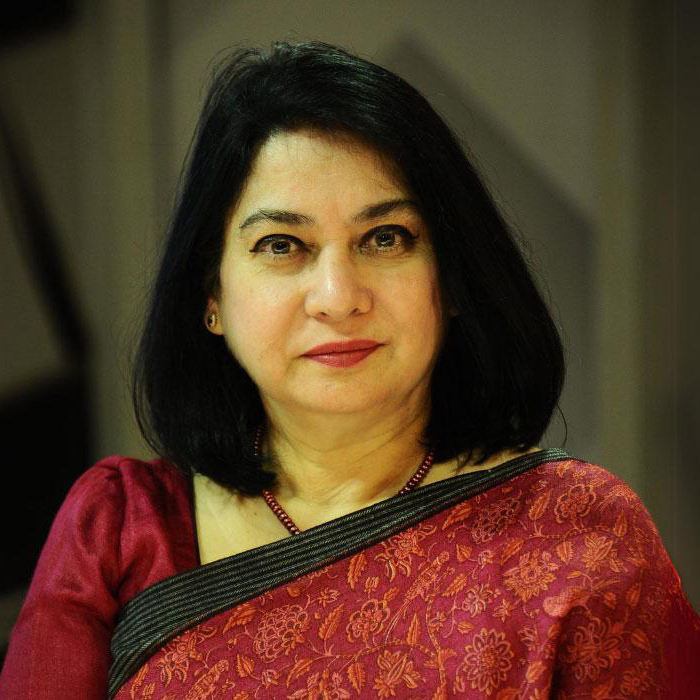
Dr Fahmida Khatun is one of Bangladesh’s leading development economists and a recognised voice on economic policy and sustainable development in the Global South. With more than three and a half decades of experience in economic research and public policy analysis, she has worked extensively with governments, United Nations agencies, multilateral development banks, bilateral development partners, public sector financial institutions, research institutions, and the private sector to address complex economic and development challenges.
Dr Khatun is currently a Distinguished Fellow of the Centre for Policy Dialogue (CPD). In her role as Distinguished Fellow, Dr Khatun contributes to CPD’s research, policy analysis and public engagement. She leads research teams and major research projects, provides intellectual and strategic guidance to research initiatives, and contributes to developing new areas of research and policy work. She mobilises resources and develops partnerships to support CPD’s research programmes and institutional priorities. In addition, Dr Khatun engages in national and international policy dialogues, strengthens collaboration with research institutions and development partners, and contributes to mentoring and building the capacity of CPD’s researchers.
She has several publications to her credit at home and abroad.
Recent articles
- What Nepal’s devastating floods teach us about climate vulnerability
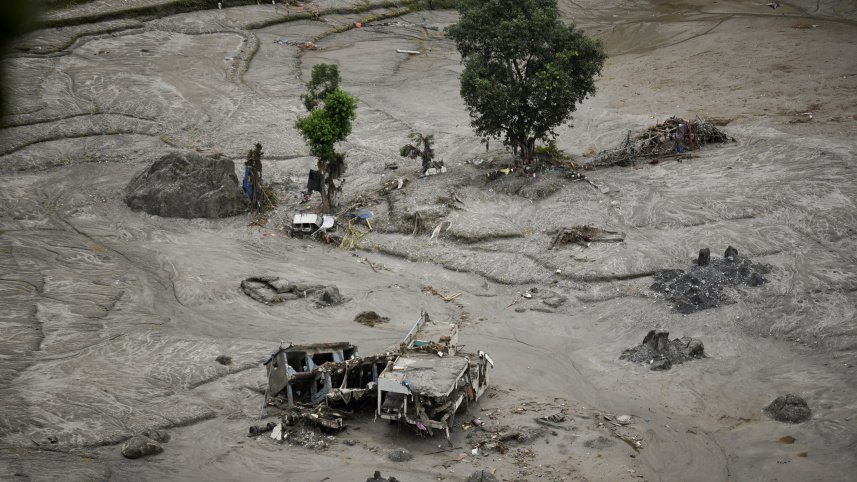 Nepal is a natural disaster hotspot, but over the past several years, the scale of damage caused by disasters have grown severe. The country experienced the severe Gorkha earthquake in 2015, monsoon floods and landslides in 2017 and 2024
 - New pay scale justified amid inflation, but funding a challenge
 If the increase is financed through bank borrowing, money creation or cuts in development spending rather than higher tax revenue, it could put additional pressure on the economy.
 - We need energy security, not just a fix for the current crisis
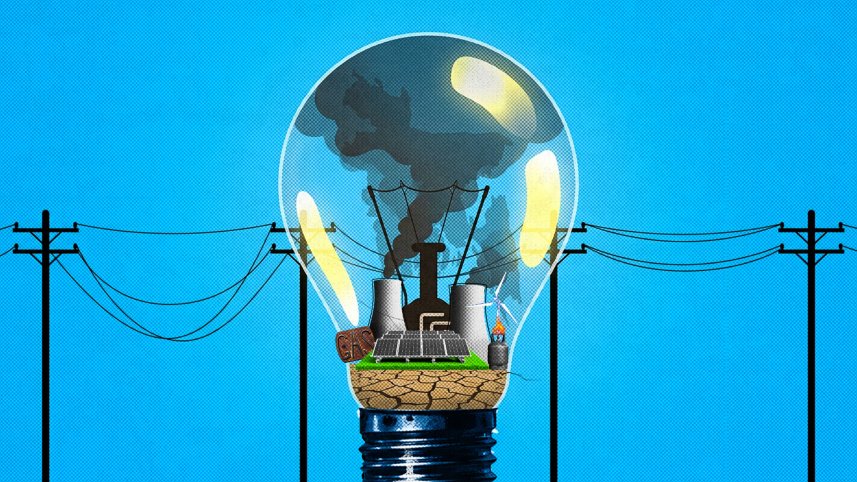 The global economy is facing an energy crisis due to supply disruptions amid the war in West Asia. Since energy, vital to economic security, has also become a key part of geopolitics, countries have become more vulnerable to energy shocks.
Recent publications
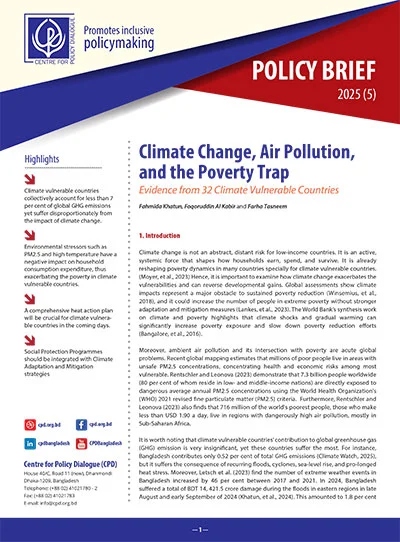
- Climate Change, Air Pollution, and the Poverty Trap – Evidence from 32 Climate Vulnerable Countries
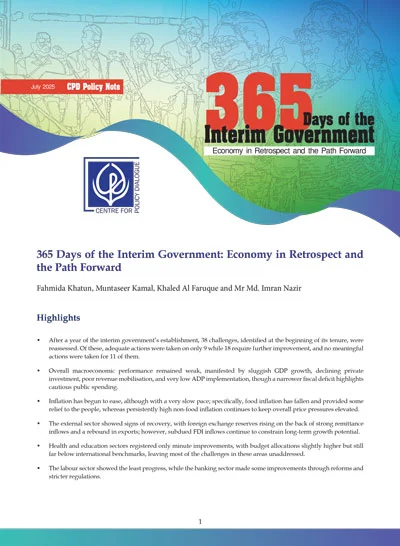
- 365 Days of the Interim Government: Economy in Retrospect and the Path Forward
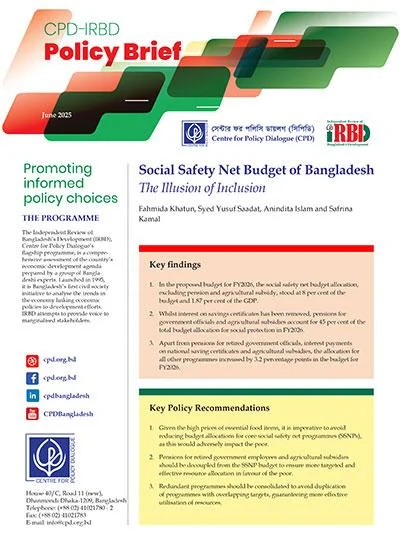
- Social Safety Net Budget of Bangladesh – The Illusion of Inclusion
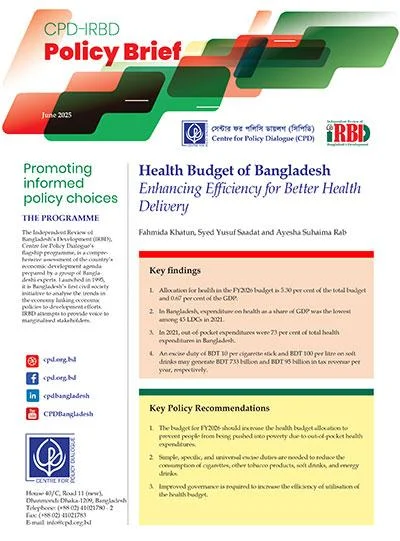
- Health Budget of Bangladesh – Enhancing Efficiency for Better Health Delivery